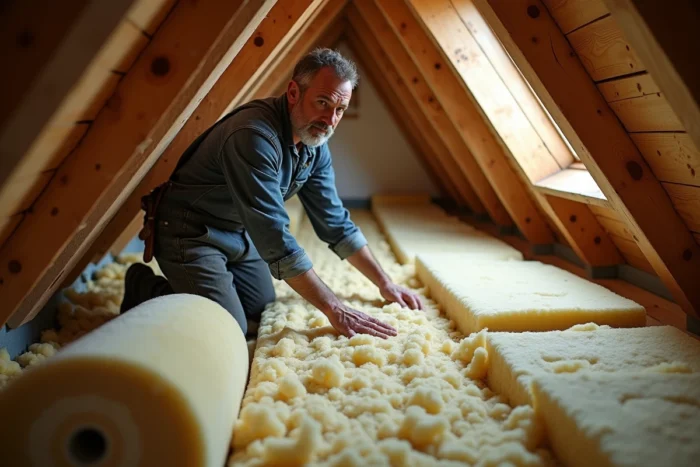
On a renovation site, the problem is quickly identified: the roof remains the primary source of thermal loss in a house. When we work in winter on uninsulated attics, the temperature difference between the ceiling and the rest of the room can be felt by hand. Insulating the roof means addressing the most cost-effective weak point of the building, both for winter comfort and to limit overheating in summer.
Thermal lag in roofing: the criterion that quotes often overlook
Most roofing insulation quotes highlight the thermal resistance R, expressed in m².K/W. This is a reliable indicator for winter: the higher R is, the less heat escapes. However, this figure says nothing about the roof’s behavior in the middle of summer.
Thermal lag measures the time it takes for external heat to pass through the insulation. A material with a short lag allows solar heat to penetrate within a few hours, turning the attic into an oven by midday. Insulation with a long lag delays this temperature rise until night, when ventilation can occur.
The Ademe now incorporates this notion of summer comfort in its practical sheets on roofing insulation. The MaPrimeRénov’ aids and the CEE also take inertia and lag into account in their recommendations, guiding towards insulations capable of protecting the house in both seasons. When looking for how to effectively insulate the roof, this dual winter/summer criterion should be at the top of the list.
Bio-based insulation for roofing: wood fiber, cellulose wadding, and hemp
Bio-based insulations are gaining ground on roofing renovation sites, and it’s not just a matter of image. The CSTB has recorded a clear increase in Technical Opinions regarding bio-based roofing insulations since 2022, particularly for sarking and converted attics.
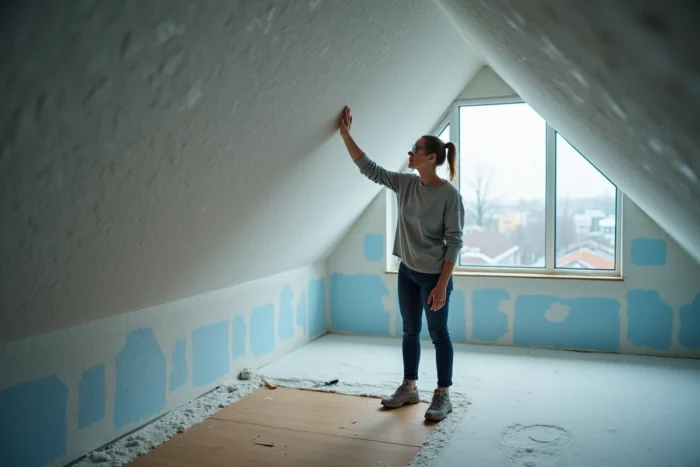
Three materials frequently appear on site:
- Wood fiber: high density gives it excellent thermal lag, ideal in rigid panels for sarking or semi-rigid panels between rafters.
- Cellulose wadding: blown into lost attics, it offers a good performance/price ratio and superior lag compared to traditional mineral wools.
- Hemp: often mixed with linen or cotton, it regulates humidity well, an asset in old frameworks where managing water vapor is delicate.
These materials share a concrete advantage over polyurethane or polystyrene: their density slows down summer heat much longer. In return, they require a slightly greater thickness to achieve the same thermal resistance R in winter. Thus, a balance is struck between bulk and overall comfort throughout the year.
Roof insulation from the inside or outside: deciding based on the site
The choice between internal insulation (ITI) and external insulation (ITE, often referred to as sarking for sloped roofs) is not made from a catalog. It depends on the condition of the covering, the framework, and the use of the attic.
When internal insulation is necessary
If the covering is in good condition and the budget is tight, we insulate from the inside. The insulation is placed between the rafters, complemented by a crossed layer beneath the rafters to limit thermal bridges. This method slightly reduces the habitable volume under the slope.
A point of caution: the vapor barrier must be installed on the warm side, without discontinuity. A tear or poorly taped overlap allows water vapor to pass through the insulation, degrading its performance and potentially causing mold on the framework. Feedback on this point varies among craftsmen, but an air tightness test after installation remains the best guarantee.
When sarking becomes relevant
If the covering needs to be redone anyway, the additional cost of sarking is justified. The tiles or slates are removed, rigid insulating panels (wood fiber, polyurethane, or polyisocyanurate) are fixed directly onto the decking, and then the covering is replaced on top.
Sarking eliminates almost all thermal bridges at the framework level. It also preserves the interior volume of the attic, which is crucial when the height under the ridge is limited. However, this technique requires an experienced roofer and complete scaffolding.
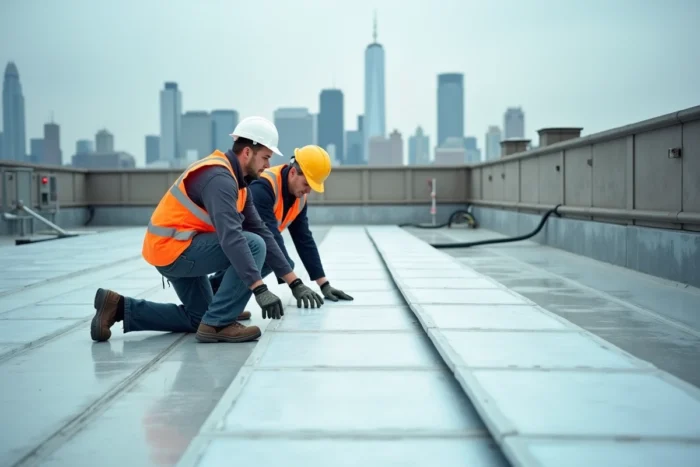
Air tightness and ventilation: the two weak links in roofing insulation
A high-performance insulation poorly installed protects less effectively than an average insulation carefully placed. On site, recurring defects rarely concern the material itself.
- Air leaks at wall/roof junctions, around chimney flues, and at the passage of electrical ducts. Each leak creates a thermal bridge and an entry point for moisture.
- Absence of a ventilated air gap under the covering. Without this ventilation, condensation accumulates between the insulation and the tiles, accelerating wood degradation.
- Punctured or absent vapor barrier, allowing indoor humidity to migrate into the thickness of the insulation.
Before choosing an insulating material, it is beneficial to check that the craftsman plans an air permeability test at the end of the project. This test validates the actual quality of the installation, much more than the technical sheet of the insulation.
Roof insulation remains the most direct lever to improve the thermal comfort of a house year-round. The choice of material matters, but the rigor of installation and management of air tightness make the difference between a successful energy renovation and a project that needs to be redone three years later.