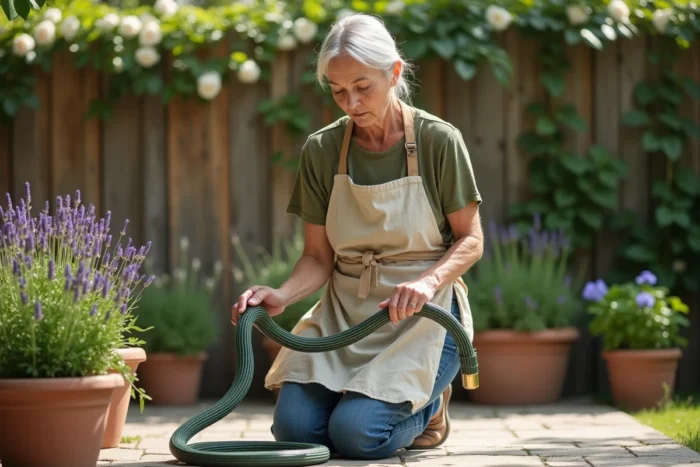
An expandable garden hose left filled with water in a plastic bin for three days during a heatwave shows us all the result: deformed latex, soft retraction, and leaks at the connection the following week. This type of hose relies on a double wall (internal tube made of latex or TPE, external textile sheath) that tolerates neither stagnant water nor prolonged heat. Maintaining an expandable hose is not like maintaining a traditional hose, and neither is the storage.
Water Temperature and Micro-Cracking of the Internal Tube
We connect the hose to the outdoor tap without thinking, but in summer, the water that stagnates in the pipe exposed to the sun can reach temperatures well above what latex can withstand. Gardena, Hozelock, and Cellfast remind us in their user manuals that the water should not exceed 35 to 40 °C to preserve the elasticity of the internal tube.
Beyond that, micro-cracking accelerates. The latex gradually loses its ability to retract, and some brands specify that exceeding this limit voids the warranty. Before watering, one can let it run for a few seconds to flush out the overheated water in the supply hose, especially if the tap is in full sun.
You can also learn more at Le Jardin d’Emilie to delve into best practices related to this type of equipment in the garden.
Draining and Drying the Expandable Hose Before Storage
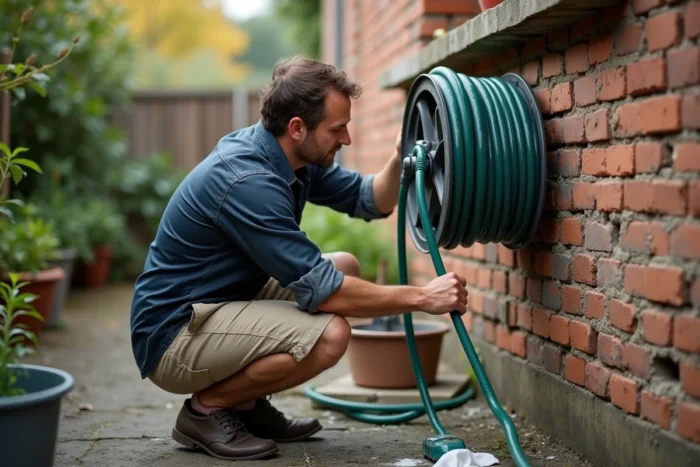
Most users turn off the tap and let the hose retract by itself. The problem is that water gets trapped in the folds of the inner latex. This stagnant water, especially in hot weather, accelerates the degradation of the material and promotes odors.
Completely draining the hose after each use significantly extends its lifespan. The most effective method: disconnect the hose from the tap, lift it by one end, and let it drain by gravity along its entire length. One can shake it gently to dislodge pockets of water stuck in the folds.
Once drained, the hose should dry in the shade. Hanging it on a wide support (not a thin nail that creates a bending point) for about ten minutes is sufficient. Storing a still damp hose in a closed bin creates an ideal environment for mold on the textile sheath.
UV Exposure: Should You Bring the Expandable Hose Inside After Each Use?
Since 2023-2024, several manufacturers offer “anti-UV” textile sheaths tested according to standardized aging protocols. Hozelock and Kärcher, in particular, have updated their ranges with fabrics designed to withstand prolonged exposure to the sun.
That said, an anti-UV sheath does not exempt you from storing the hose out of the elements. These treatments slow down degradation; they do not prevent it. An expandable hose left permanently on a south-facing terrace all summer will eventually show signs of textile wear long before a hose stored in the shade between uses.
The best practice is to consider UV protection as a safety margin for occasional forgetfulness, not as a green light for permanent outdoor storage. After watering, we store it. If we’re feeling lazy, at the very least, we move the hose under a bench, a garden table, or against a wall in the shade.
Storing the Expandable Hose: Practical Solutions Based on Available Space
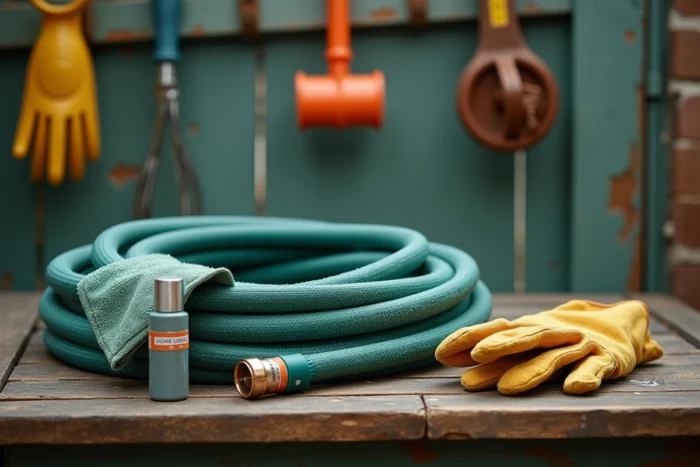
A retracted expandable hose takes up little space, which opens options that a traditional hose does not allow. The choice of storage mainly depends on the configuration: balcony, small city garden, or larger yard.
Basket or Canvas Bag on a Balcony
On a small balcony or terrace, a simple ventilated basket or a thick canvas bag does the trick. The retracted and drained hose fits naturally inside. The ventilation of the container is the main criterion: a closed plastic bin retains residual moisture and accelerates degradation. Prefer an open or perforated container.
Wall Mount in a Garden Shed or Garage
For those with a mounting point available, a wide wall mount (not just a simple thin hook) allows you to hang the hose without creating permanent bends. Latex remembers prolonged folds, which eventually creates weak points where leaks appear. A semicircular support of at least ten centimeters in width distributes the weight better.
What to Avoid
- Winding the expandable hose on a standard reel designed for rigid hoses: the latex gets unevenly compressed, and the folds mark the internal tube.
- Storing the hose directly on a concrete floor in the middle of summer: the heat stored by the slab damages the latex through direct contact.
- Leaving the hose connected to the tap under pressure between uses: even with the tap closed, residual pressure keeps the latex stretched permanently and fatigues the material.
Protecting an Expandable Hose in Winter: Mistakes That Shorten Its Lifespan
Frost is the main enemy of latex. Any residual water that freezes in the internal tube can permanently crack it. Before the first frosts, draining must be even more thorough than in season: disconnect the hose, drain it completely, and then let it dry for several hours before storing it indoors.
An unheated garage is suitable, provided the hose is laid flat or hung, never crumpled into a ball. Experiences vary on this point, but several users report that hoses stored folded all winter never regain their original retraction in spring.
Three precautions for winter storage:
- Check that the brass or plastic fittings are dry to avoid oxidation or freezing in the threads.
- Store the hose in a breathable fabric bag rather than a plastic bag to avoid any condensation.
- Keep the hose away from heat sources (radiator, boiler) that dry out the latex and make it brittle.
A well-drained, dried, and stored expandable hose protected from frost and direct sunlight lasts several seasons without loss of performance. Most premature failures come from careless storage, not from manufacturing defects. Taking five minutes after each watering to drain and shelter the hose is the gesture that makes the difference between needing a replacement every year and having equipment that lasts over time.