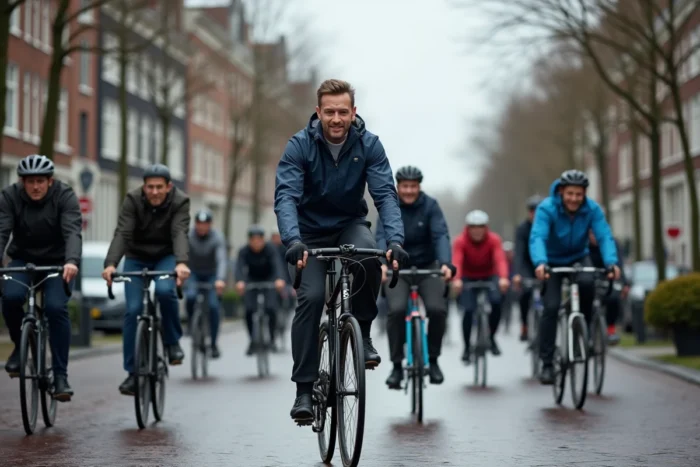
How many daily trips do the Dutch make by bike, and how are these volumes evolving with the arrival of new vehicles on the bike paths? Recent data paints a changing landscape, where the dominance of the classic bike coexists with the rise of electric bikes and fatbikes, creating unprecedented tensions on the infrastructure.
Electric bike in the Netherlands: a steadily growing market
The Dutch electric bike market provides a quantified entry point to measure the dynamics of cycling in the country. Data compiled by Mordor Intelligence helps to situate the orders of magnitude.
| Indicator | Value |
|---|---|
| Market size e-bike (2025) | $1.71 billion |
| Market size e-bike (2026, forecast) | $1.76 billion |
| Market size e-bike (2031, forecast) | $2.02 billion |
| Compound annual growth rate (2026-2031) | 2.79% |
| Market concentration | Average |
An annual growth rate of 2.79% may seem modest compared to other European markets. It actually reflects a market that is already mature, where the equipment rate is among the highest in the world. The progress is made through the renewal of the fleet and upgrading, not by attracting new users.
To delve deeper into the statistics on cycling in the Netherlands, usage frequency data complement this economic reading of the market.
Bicycle usage frequency and demographic profile distribution

In 2020, Dutch people aged 6 and older used their bikes on average 4.4 times per week. This figure, from CBS (Dutch Central Bureau of Statistics), places cycling far ahead of any other active mode of transport in the country.
The age distribution reveals notable discrepancies. Adolescents aged 12 to 17 show the highest frequency, driven by school trips. Dutch women cycle about 17% more than men, with 2.4 billion annual trips compared to 2.0 billion for men.
About 7 out of 10 Dutch people report cycling at least once a week. Biking accounts for about a quarter of all daily trips, a ratio unmatched in Europe.
Gender gap: a Dutch specificity
In most European countries, men dominate cycling statistics. In the Netherlands, the trend is reversed. This peculiarity is linked to the quality of the cycling network, separated from car traffic, which reduces the feeling of insecurity often cited as the main barrier to female cycling participation.
The overrepresentation of women concerns both utility trips (errands, accompanying children) and commuting. This is not a recent phenomenon, but the latest data confirms its persistence.
Fatbikes and speed-pedelecs: coexistence on Dutch bike paths
Since 2024, the Netherlands has been testing a speed limit of 20 km/h on certain bike paths. This unprecedented measure for a country that has built its reputation on cyclist freedom addresses a concrete problem: the coexistence of classic bikes, electric-assist bikes, speed-pedelecs, and fatbikes on the same infrastructure.
Fatbikes pose a specific problem. Often used by adolescents, these vehicles are frequently modified to exceed speed limits, reaching speeds incompatible with shared use of bike paths. The Dutch government is preparing a set of targeted measures for 2024-2025:
- Introduction of a minimum age to ride a fatbike, aimed at reducing accidents among younger users
- Mandatory helmet use for certain categories of users
- Allowing municipalities to create fatbike-free zones in city centers and heavily trafficked pedestrian areas
- Strengthening import and marketing controls to limit illegal or easily modified models
The increase in accidents involving fatbikes, particularly among adolescents, is the main trigger for these regulations. Dutch authorities recognize the need to redefine the uses of bike paths to preserve safety on a network originally designed for bikes traveling between 15 and 25 km/h.
Dutch cycling network facing vehicle diversification
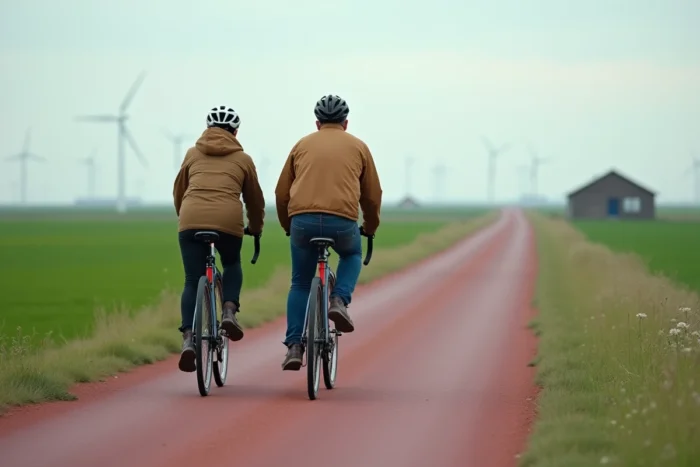
The cycling network in the Netherlands remains the most dense and well-maintained in Europe. Physically separated bike paths, bike-priority intersections, and dedicated parking at train stations form a complete ecosystem.
This infrastructure was designed for homogeneous use: city bikes traveling at moderate speeds. The arrival of vehicles with very different characteristics (weight, speed, size) necessitates a reflection on the segmentation of paths.
Towards differentiation of paths by speed
Some Dutch municipalities are considering separating flows by speed category, following the model already in place for speed-pedelecs in a few urban areas. The cost of such segmentation remains a barrier, but the increase in the number of e-bikes intensifies the pressure on road managers.
The Netherlands finds itself in a paradoxical position: its lead in cycling infrastructure exposes it first to the problems that other European countries will encounter in the coming years. The way they balance freedom of movement and collective safety on bike paths will likely serve as a reference for the rest of the continent.
The figure that best summarizes the current situation remains that of the e-bike market: an annual growth of 2.79% in a market already valued at over $1.7 billion. The question is no longer whether the Dutch cycle, but at what speed and on what vehicles they do so.