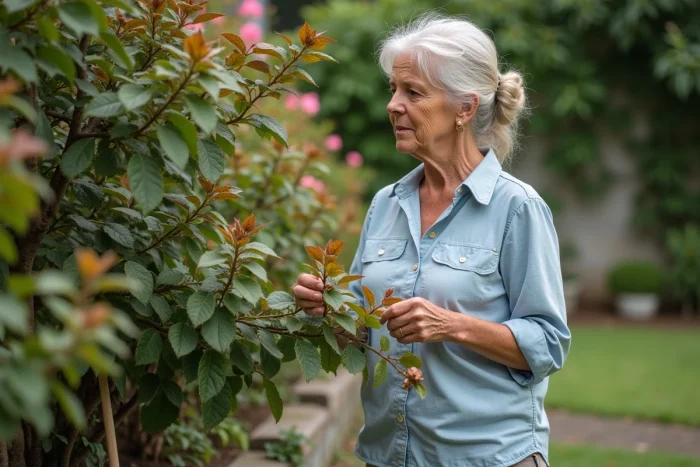
Abundant watering can cause yellowing or browning of the leaves of the oleander, even during periods of intense heat. Conversely, some cultivars struggle with drought despite their reputation for Mediterranean hardiness.
Symptoms of water stress or fungal diseases often go unnoticed until irreversible damage appears. A precise adjustment of maintenance practices limits risks while promoting healthy growth and lasting flowering.
Why do oleander leaves turn brown and dry in summer?
In the height of summer, the oleander is not immune to a serious setback. Browning foliage, drying tips: these are warning signals not to be ignored. Several causes can explain the concerning state of your shrub, which is known for its resilience.
The combination of scorching sun and improper watering puts the root system to the test. If the soil becomes dry, the plant struggles to draw the necessary water; conversely, stagnant moisture suffocates the roots and triggers the shedding of the oldest leaves, which dull and then fall. This imbalance does not forgive.
Fungal diseases such as verticillium wilt or powdery mildew can also arise, accelerating the decline of the oleander. Add to this the threat of aphids, scale insects, or red spiders, which weaken the plant by attacking its sap. Spots, discoloration, or chlorosis sometimes indicate a lack of iron or overly calcareous soil, two factors that impair leaf vigor.
For further remedies, consult “how to save an oleander with brown leaves.” Knowing how to detect the cause allows for prompt intervention and helps preserve the beauty of the oleander in your garden.
Identifying the causes: heat, watering, diseases, or pests?
When the oleander shows brown or dry leaves, it is better to take the time to observe before acting. Excessive heat, combined with irregular watering, leads to water stress that undermines the plant’s vitality. Depending on the soil texture, water may be lacking or stagnant, disrupting nutrient absorption, particularly iron, which promotes chlorosis and yellowing of the leaves.
Fungal diseases are also a concern: powdery mildew or verticillium wilt manifest as dark spots or a whitish fuzz as soon as humidity settles around the plant. Stale air and waterlogged soil favor the proliferation of these fungi.
Here are the main elements to monitor to pinpoint the cause of the problem:
- Pests: aphids, scale insects, and red spiders extract sap and leave visible traces, such as sticky, deformed leaves or areas marked by dryness.
- Inappropriate soil: a substrate that is too calcareous or poorly drained limits access to nutrients and exacerbates the suffering of the oleander.
Observe carefully: yellow leaves, localized browning, traces of honeydew, or silky threads under the foliage are all revealing signs. This analysis guides the choice of effective solutions to restore vigor to the plant.

Simple actions to restore vitality to your oleander during the hot season
If your oleander shows signs of weakness, a few concrete adjustments can make a difference. Careful watering, neither too sparse nor excessive, is essential: the ideal is to provide water in the evening, directly at the base, without wetting the leaves to limit the risk of diseases. For potted plants, ensure that water does not stagnate in the saucer, and prioritize effective drainage.
An organic mulch maintains freshness and protects the roots from drying out. To support the plant, a fertilizer rich in potassium promotes flowering and strengthens the structure of the oleander, provided that excess nitrogen is avoided, which favors foliage at the expense of flowers. If insects appear, a bit of diluted black soap is often enough to limit their presence without harming the garden’s balance.
Pruning the oleander, done after flowering, helps the plant concentrate its energy on healthy new shoots. Remove dry branches and brown leaves without delay to encourage recovery. For potted plants, a temporary move to a semi-shaded area and protection from the wind helps prevent heat stress.
To keep the oleander healthy during the summer, adopt these reflexes:
- Adjust watering according to the weather
- Reapply fresh mulch each hot season
- Inspect the foliage weekly to quickly spot any signs of weakness
With regular actions and sustained attention, the oleander regains its vigor and brightness, ready to display its flowers under the sun without fail. When each leaf comes back to life, the entire garden feels the effect.