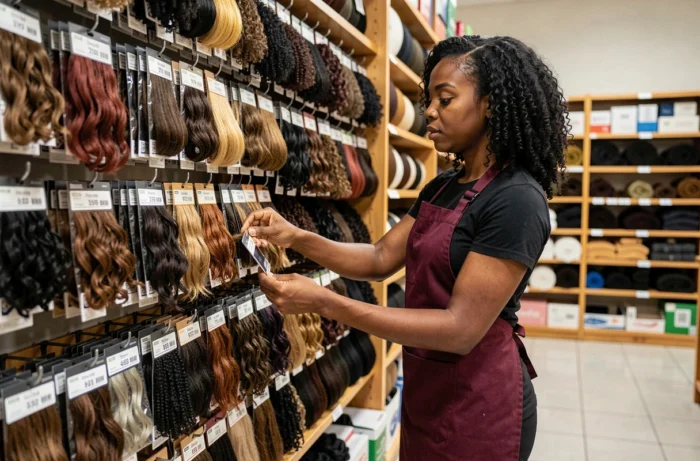
Entering an afro hair extension shop, you come across dozens of suspended packets, brand names you don’t recognize, various textures, and no clear indication of the composition. The instinct is to choose based on price or appearance. This is also the best way to leave with a product unsuitable for your hairstyle or, worse, irritating for the scalp.
Traceability of afro hair extensions: the first filter to apply in-store
Before even looking at the texture or color, check what is on the packaging. A packet of extensions without mention of the manufacturer, importer, or country of origin is a warning sign. Since December 13, 2024, the European regulation on general product safety requires enhanced information on traceability and the economic operators responsible for non-food consumer products.
Specifically, a structured store displays the commercial origin and batch reference on each product. This applies to both synthetic extensions and natural hair extensions. If the seller cannot answer the question “who made these extensions?”, we move on.
For cosmetic products sold as supplements (gels, setting sprays, adhesives), European regulation No. 1223/2009 requires that a responsible party established in the European Union be identifiable on the labeling. A store selling hair care products without this mention is likely reselling imported products without regulatory oversight. This is a simple but remarkably effective criterion to find a good afro hair extension shop on your first visit.
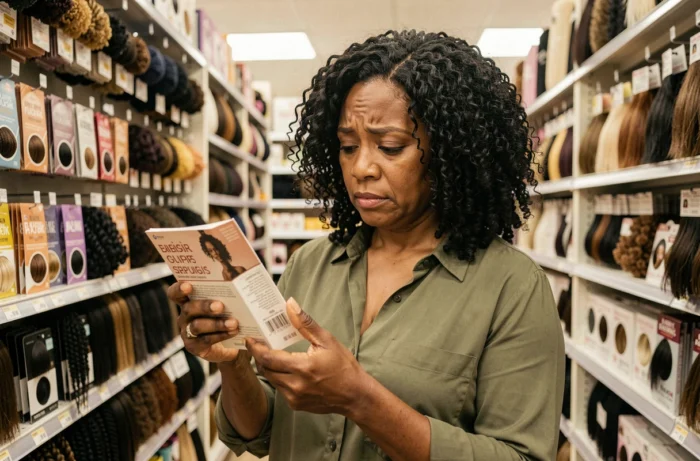
Synthetic or natural extensions: what the seller should be able to explain
A good test is to ask the seller a technical question. For example: “Does this extension withstand hot water to seal the ends?” or “Is it high-temperature kanekalon or standard fiber?” The answer (or lack of answer) says a lot about the seriousness of the store.
A knowledgeable seller distinguishes fibers by their heat resistance, weight, and appearance once braided. Natural hair extensions vary according to their grade, origin, and any chemical treatment. A shop selling natural extensions without being able to specify whether they have been bleached or treated with silicone lacks transparency.
Feedback varies on this point, but it is observed that stores that invest in training their staff also provide better support in choosing the texture suitable for the desired hairstyle (box braids, twists, crochet braids, locks).
Questions to ask before buying
- What is the exact composition of the fiber (kanekalon, toyokalon, flame-retardant fiber) and does it withstand curling irons or boiling water?
- For natural extensions: what treatment have they undergone, and can they be colored after purchase without risk of breakage?
- Does the store offer an exchange or credit if the texture does not match what is stated on the packaging?
Hair care products on the shelf: spotting compliant products
A serious afro hair extension shop does not limit itself to extensions. It offers products suitable for curly, coily, or locked hair. Again, the quality of the hair care section provides a reliable indication of the store’s positioning.
Checking the INCI list on each product is a habit to adopt. Gels, jellies, and styling creams must display their complete composition. A store selling products without labeling in French or without an ingredient list does not comply with current regulations.
Attention should also be paid to the presence of recognized ranges for afro and coily hair, with verifiable customer reviews. A well-organized section, with clear categories (hydration, curl definition, lock care, edge control), shows that the manager understands the specific needs of their clientele.
Warning signs in the hair care section
Products without a visible expiration date, repackaged bottles without original seals, or abnormally low prices on brands typically sold in professional salons: these elements should raise alarms. An excessively low price often indicates a parallel supply chain, without guarantees of preservation or compliance.
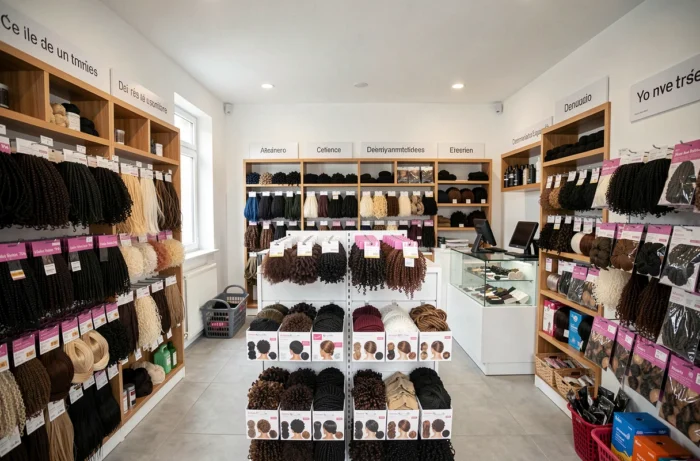
Customer reviews and local reputation: beyond the storefront
The appearance of the store matters, but it is not enough. The on-site evaluation is complemented by online review research. Platforms like Google Maps allow you to read feedback from other customers about the quality of the extensions, the availability of sizes and colors, and especially the in-store advice.
Detailed reviews mentioning a specific hairstyle type are the most reliable. A comment like “I bought extensions for passion twists, the texture matched exactly the photo” is worth more than an overall rating without context.
We also check if the store is active on social media with photos of real results, not just supplier visuals. A shop that shares customer feedback with completed hairstyles shows that it masters the chain, from the product sold to the final result.
Pricing policy for afro hair extensions: what a coherent price reveals
The price of a packet of extensions varies according to the fiber, length, and weight. A transparent store displays these three parameters on the label or on the shelf. When comparing two shops, the consistency between the displayed price and the product characteristics is more revealing than the gross amount.
A store that sells all its extensions at the same price, regardless of length or material, is likely practicing price smoothing that masks quality differences. Conversely, a clear and segmented pricing grid by fiber type and length reflects rigorous stock management.
The last point to check: the return policy. A store that refuses any exchange on unopened extensions may be protecting itself from frequent complaints about quality. A brand confident in its products generally accepts credit or exchange under reasonable conditions, which remains the best indicator of reliability even before opening the packet.